

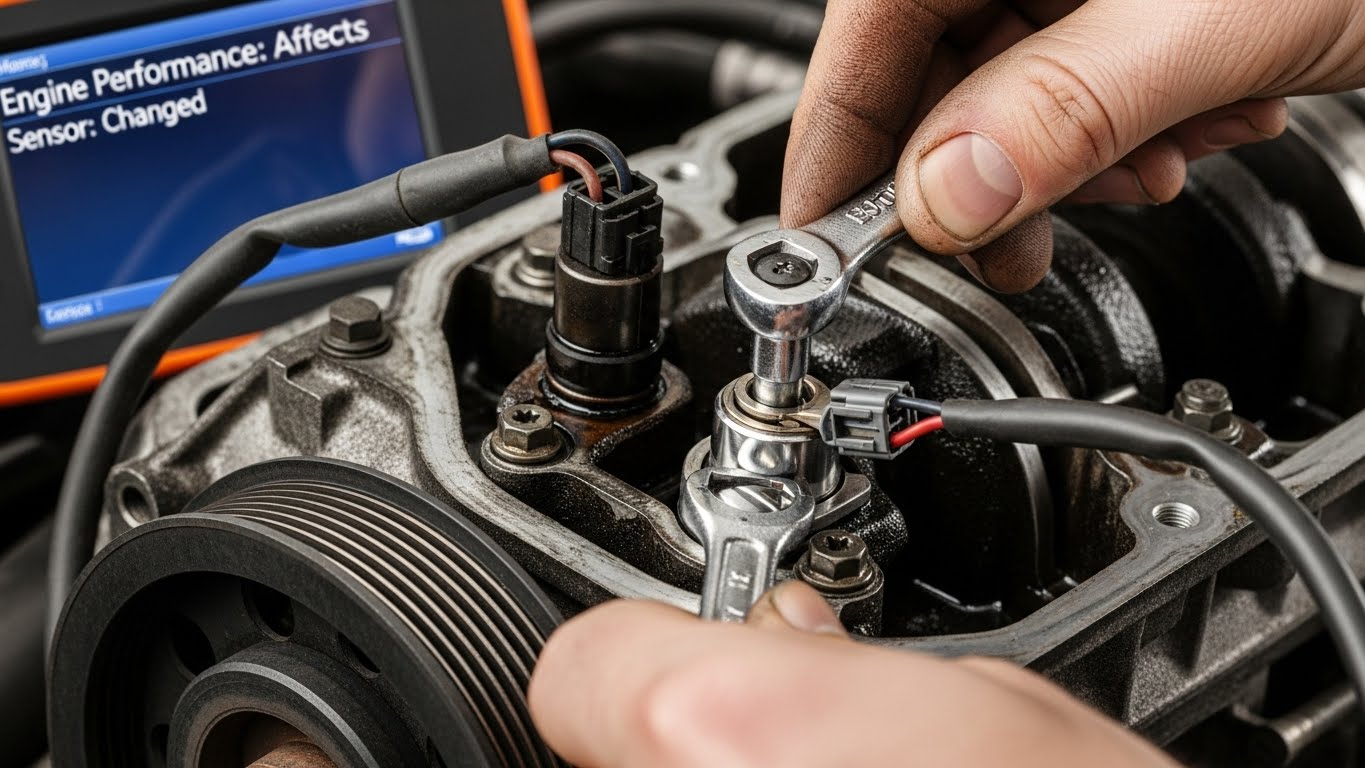
The Changed Crankshaft Position Sensor might seem like a small component of your vehicle, but its role is anything but insignificant. Imagine driving down the road when suddenly, your engine begins to sputter and lose power. That could very well be linked to a faulty or changed CPS. Understanding this crucial piece can not only save you from unexpected breakdowns but also enhance your engine’s performance.
Whether you’re an automotive enthusiast or just someone who wants their car running smoothly, knowing about the crankshaft position sensor is vital. Let’s dive into what happens when you change this essential part and how it affects overall engine performance!
What is a Changed Crankshaft Position Sensor?
The Changed Crankshaft Position Sensor (CPS) is a crucial component in your vehicle’s engine management system. It monitors the position and rotational speed of the crankshaft, providing essential data to the engine control unit (ECU).
When we refer to a “changed” crankshaft position sensor, it typically means that this part has been replaced due to malfunction or wear. A functioning CPS ensures precise timing for fuel injection and ignition, allowing your engine to perform efficiently.
If you’ve had your CPS changed recently, it’s important to understand how this can impact various aspects of your vehicle’s performance. This small yet significant sensor plays a vital role in maintaining optimal operation by ensuring that everything runs smoothly under the hood.
Importance of the CPS in Engine Performance
The Changed Crankshaft Position Sensor (CPS) plays a crucial role in engine performance. It monitors the position and rotational speed of the crankshaft, sending vital data to the engine control unit (ECU). This information helps regulate fuel injection and ignition timing.
Without an accurate CPS, your engine may struggle to operate efficiently. The ECU relies on this sensor to make real-time adjustments that ensure optimal combustion. When the CPS malfunctions, it can lead to misfires, stalling, or even complete failure to start.
Moreover, a functioning CPS enhances overall vehicle responsiveness. Smooth acceleration and consistent power delivery depend heavily on this component’s accuracy. Drivers often overlook its significance until issues arise.
Understanding how essential the CPS is can help you appreciate regular maintenance checks for your vehicle’s health and longevity. Keeping this small but mighty sensor in top condition pays off in reliable performance on the road.
Signs of a Failing CPS
A failing Changed Crankshaft Position Sensor can manifest in several noticeable ways. One of the first signs is irregular engine performance. You might experience rough idling or stalling at unexpected moments, especially during acceleration.
Another indicator is difficulty starting your vehicle. If you find yourself turning the key multiple times before the engine fires up, it’s worth investigating further.
Check engine lights are also a common warning sign. When illuminated, they could indicate various issues—including problems with the CPS.
Additionally, poor fuel efficiency may arise due to incorrect timing signals sent to the engine control unit (ECU). This inefficiency can lead to higher fuel consumption and increased expenses over time.
If your car struggles with automatic transmission shifting, this could point back to a malfunctioning crankshaft position sensor as well. Pay attention to these symptoms for smoother driving ahead.
Steps to Change the CPS
Changing the Changed Crankshaft Position Sensor (CPS) can seem daunting, but with the right steps, you can tackle it confidently.
Start by gathering your tools: a wrench set, screwdrivers, and some safety gloves. Make sure to disconnect your vehicle’s battery for safety before diving in.
Next, locate the CPS. This is often found near the engine block or at the transmission bell housing. It may require removing some components for better access.
Once you have clear visibility, unscrew and detach the old sensor carefully. Pay attention to any clips or connectors that might be holding it in place.
Now it’s time to install the new CPS. Align it properly and secure it tightly with screws.
Reconnect everything you had removed earlier and hook up your battery again. A quick start-up will let you know if everything went smoothly!
Effects on Engine Performance after Changing the CPS
Changing the crankshaft position sensor can significantly influence engine performance. A new CPS often leads to smoother idling. You might notice a reduction in vibrations typically associated with an aging sensor.
Acceleration may improve as well. With accurate timing information sent to the engine control unit, your vehicle can respond faster when you press the gas pedal. This responsiveness is crucial for everyday driving experiences.
Fuel efficiency could see a boost too. An optimized air-fuel mixture results from precise data provided by a functional CPS, allowing your car to run more economically.
However, these benefits depend on proper installation and calibration of the new sensor. If installed incorrectly, it may lead to further issues down the line that negate its positive effects.
Keep in mind that changing just the CPS isn’t always enough for peak performance; other components also play vital roles in how smoothly your engine runs.
Other Factors that Affect Engine Performance
Engine performance is influenced by several factors beyond the Changed Crankshaft Position Sensor. One major element is fuel quality. Using low-grade or contaminated fuel can lead to poor combustion and reduced power output.
Air intake plays a crucial role as well. A clogged air filter restricts airflow, which can hinder engine efficiency and acceleration. Regular checks are vital for optimal performance.
Ignition system components also affect how well an engine runs. Worn spark plugs or faulty ignition coils may cause misfires, leading to rough idling and decreased horsepower.
Additionally, the condition of the exhaust system cannot be overlooked. Blockages or leaks in this area can create back pressure issues that stifle performance.
Routine maintenance like oil changes ensures that all parts function smoothly together, contributing to overall engine health and responsiveness in various driving conditions.
Conclusion
Understanding the role of a changed Changed Crankshaft Position Sensor is vital for any car owner. This small component has significant implications for your engine’s performance. When it starts to fail, you may notice various signs that indicate it’s time for a replacement.
Changing the CPS can restore your vehicle’s efficiency and power. Nevertheless, it’s essential to remember that other factors also influence engine performance, such as fuel quality and regular maintenance practices.
Taking care of your vehicle means staying informed about all its components. Whether you’re facing issues with acceleration or experiencing odd vibrations, paying attention to these details will help keep your car running smoothly in the long run.